No tips available yet.
Local knowledge
Picturesque Harlingen
Text: Libelle.nl editorial · 23 April 2026
If you only know Harlingen from the ferry to the Wadden Islands, you're missing something special. The harbour town is full of historical stories, hidden details and surprisingly lovely spots.
Harlingen is praised for its picturesque appearance. And upon entering the harbour town, we immediately see why. It is one of the places with the highest density of monuments in the Netherlands: over five hundred. One building is more beautiful than the next, with elegant transom lights, freshly painted frames and striking shutters. The bricks are sometimes painted in a burgundy red or yellow colour, giving the canal view something of Copenhagen. Often they are old warehouses that have been renovated with an eye for history and now serve as businesses, houses or museums, such as Het Hannemahuis.
Harlingen owes much of that picturesque appearance to Hein Buisman, a butter trader who, out of love for the city, saved many buildings from ruthless demolition just after the Second World War. Money to renovate the often dilapidated canal houses and workers' homes was scarce in Harlingen. Buisman had one of his own monumental warehouses restored as an example with great precision. He placed his other properties in a foundation that still works to preserve and restore the historic character of the city. Since the founding of the Hein Buisman Foundation, more than 130 monumental buildings have been restored. They can be recognised by a small plaque on the facade.
Warehouse De Blauwe Hand, where Buisman's restoration passion began, is in 2026 one of the most praised places in the city. Eetcafé Nooitgedagt is also a gem: a cosy hotspot for lunch or dinner, with a photogenic bar. The homemade sugar bread — we are in Friesland after all — is finger-licking good. Outside, residents and tourists walk: here on the corner, the main shopping streets Grote Bredeplaats and Voorstraat meet. You'll find a mix of familiar chains, hip concept stores, cosy eateries and remarkably many snugly decorated spots where you can indulge in artisanal sweets.


Lunch & coffee
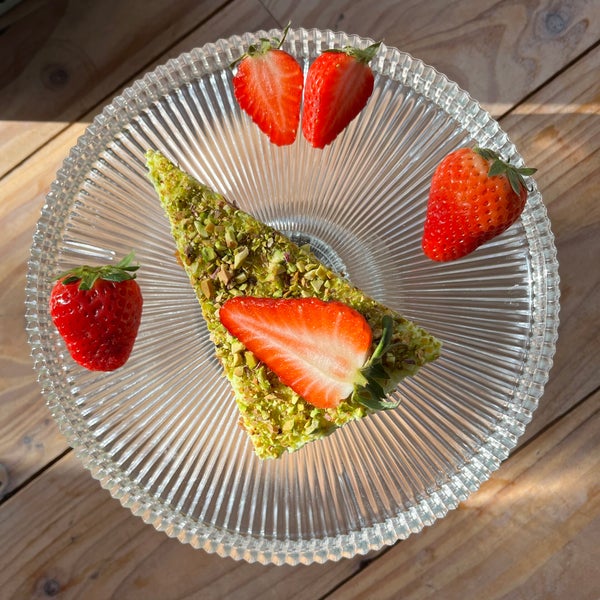


Bakkerij Elsinga
Traditional bakery with, besides bread and sweets, shelves full of real Frisian treats.
Voorstraat 10
Sleep
Shipping and trade
At the end of the atmospheric centre, the sea beckons. As the only sea harbour town in Friesland, the North Sea and Wadden Sea have always been of great importance to Harlingen. In the past mainly through shipping, which provided good times through trade. Relations with London 'across the water' were close; Harlingen was even called a suburb of the English capital. You can find the word London painted on facades several times; a sign that trade was conducted with the British city from that building. In the city park, the Engelse Tuin (English Garden), so named for its design, residents gather in summer on the terrace or during one of the activities often organised there.
In the Noorderhaven and Zuiderhaven, various historic ships attract attention, with the colourful replica of the sixteenth-century expedition ship of world traveller Willem Barentsz as the highlight. During the Tall Ship Races in July and the Fishery Days in August, those ships form the backdrop of a great party.
Every year, hundreds of thousands of travellers take the ferry to Terschelling or Vlieland. The adjacent Wadden Sea and surrounding area is a world of its own, where you can spot seals on excursions and walk on the exposed seabed at low tide. It is especially beautiful in the evening at sunset.
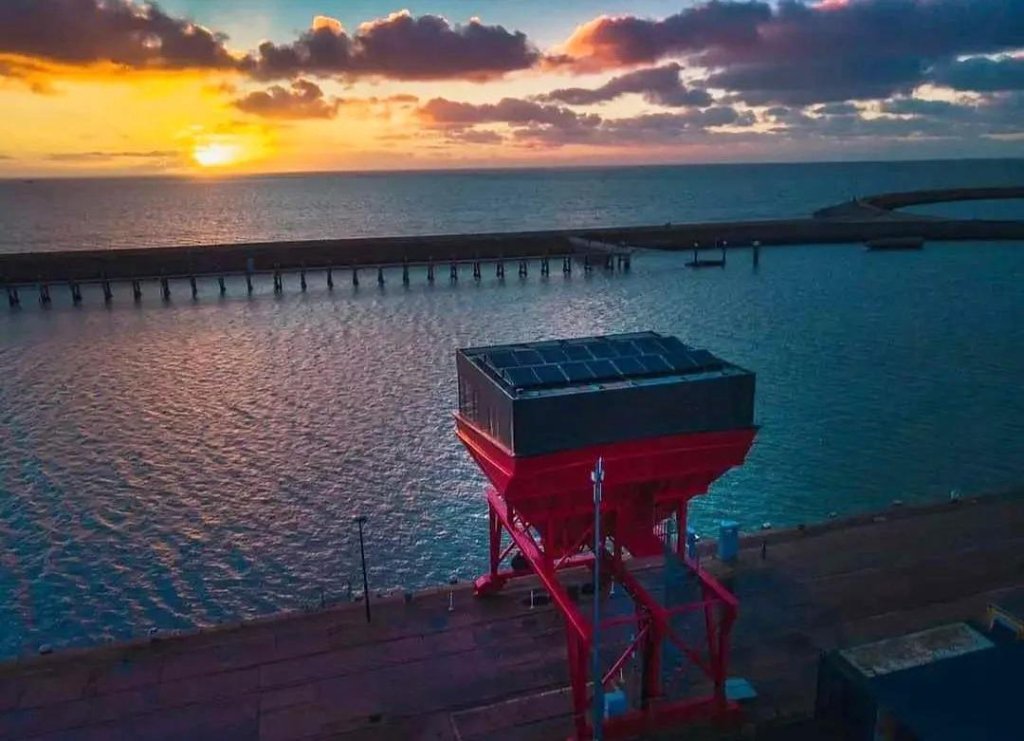
The elevated walking route leads past the lighthouse, harbour brewery Het Brouwdok, and past the Harbour Crane and the Trechter: special hotel rooms in a converted crane and (sand) hopper with a unique view of the Wadden Sea. At Jonas you eat, according to connoisseurs, the tastiest fish. In the distance stands the statue De Stenen Man (The Stone Man), a replica of an old boundary post on the Vijf Deelen Zeedijken.
Eat


Drinks


Rest, cleanliness, regularity
Harlingen has many more historical stories, some of which still resonate today. Take Sien van Hulst. Her name may not ring a bell with everyone, but her wisdom does. This Harlinger laid the foundation for district nursing and helped, despite her wealthy background, especially the less fortunate. In times of illness and poor hygiene, she went door to door to care for people. She emphasised her famous three R's: rest, cleanliness and regularity. To this day, the three R's are used by many parents — often without knowing that this wisdom comes from Harlingen.
Another clever idea: the potkast (cupboard extension), not to be confused with a podcast. When Harlingen was still the most densely populated city in the Netherlands, expansion was difficult due to the surrounding sea, dikes and meadows. The solution? Small extensions to houses: so-called potkastjes. It often saved barely half a metre, but every centimetre counted.
As you walk through the city, you come across more clever solutions, such as the kattenplankje (cat shelf): a narrow, often wooden lath between houses that are sometimes only five centimetres apart. Almost invisible to people, but not to cats and rats. The planks prevent animals from crawling between the walls.
With all those monumental buildings, potkastjes and kattenplankjes, Harlingen feels like an open-air museum. On the way back you pass the Harlinger Aardewerk- en Tegelfabriek, one of the last authentic tile factories. For more than four hundred years, tiles have been hand-shaped, painted and glazed here. 'We don't do anything new, but that makes us special.' That is precisely the charm of Harlingen: a city that doesn't innovate for the sake of innovation, but proudly continues to pass on its stories.
Shopping
Source: Libelle.nl, editorial 23 April 2026
Dinner packages
Combine your stay with a culinary experience. View our packages including dinner at top local restaurants.
View packages🍪 We use cookies
We use analytical cookies (Google Analytics) to understand how visitors use our website. Your IP address is anonymised. More info.